En
En  বাং
বাং  Ar
Ar Fr
Fr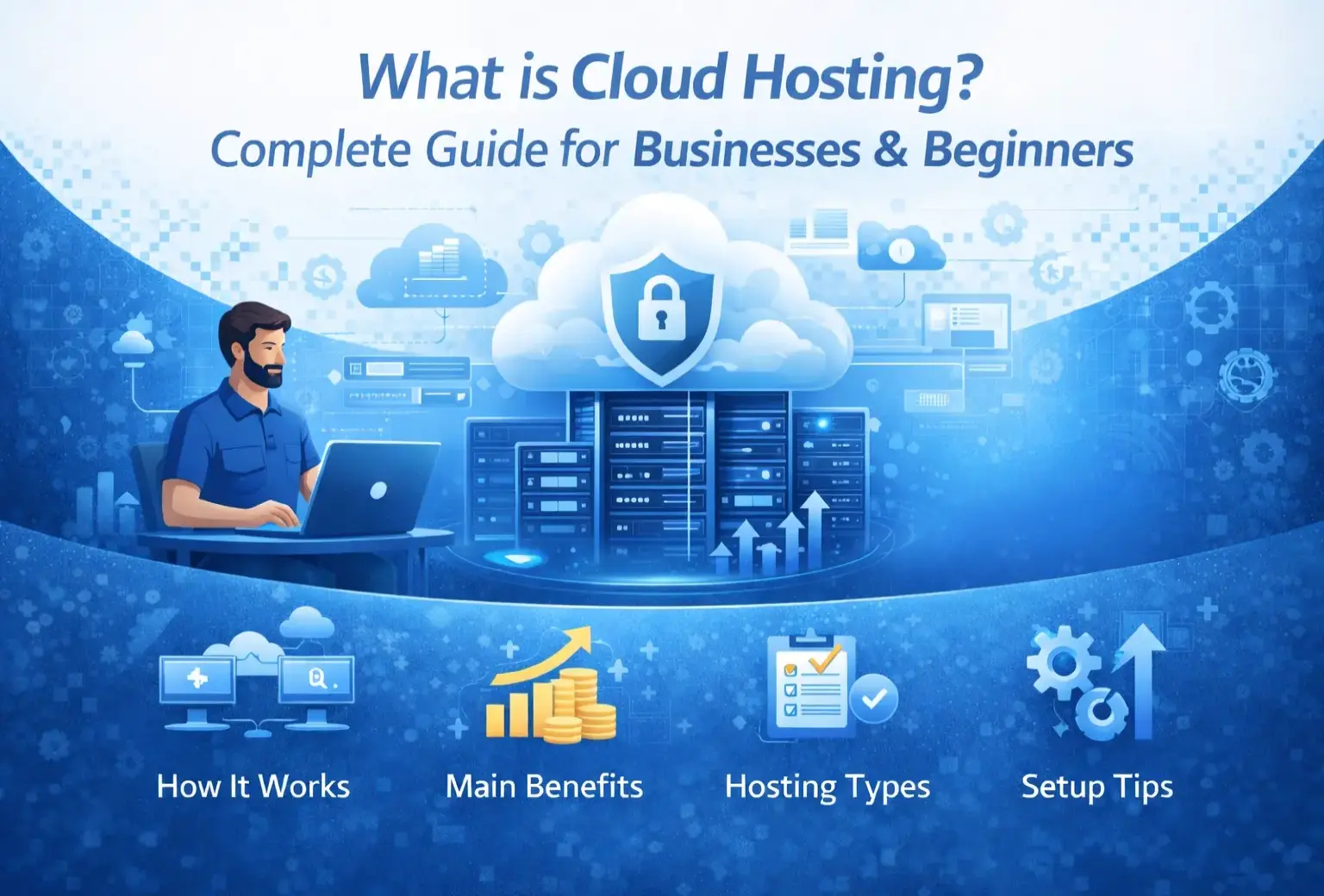
What is Cloud Hosting? Complete Guide for Businesses & Beginners
Cloud hosting is a modern web hosting solution that leverages multiple interconnected servers to host websites and applications. Unlike traditional hosting, which relies on a single server, cloud hosting distributes resources across a network, ensuring higher reliability, flexibility, and scalability. This makes it ideal for businesses, e-commerce platforms, blogs, SaaS applications, and rapidly growing websites.
Understanding cloud hosting is essential for choosing the right hosting solution that meets your website’s performance, security, and growth requirements. Here’s a detailed professional guide.
Step 1: What Cloud Hosting Means
Cloud hosting uses a network of virtual servers that draw resources from multiple physical servers. This ensures your website continues to operate even if one server fails. The main advantages include high uptime, scalability, and resource flexibility. Key points:
- Websites are hosted across multiple interconnected servers.
- Resources like CPU, RAM, and storage can scale automatically based on demand.
- Reduced risk of downtime compared to traditional single-server hosting.
- Enhanced security due to distributed architecture and redundancy.
This makes cloud hosting highly reliable for businesses expecting fluctuating traffic or requiring consistent performance.
Step 2: How Cloud Hosting Works
Cloud hosting works by connecting multiple servers to act as one system. When a user visits your website, the traffic is automatically routed to the most available server. Key aspects include:
- Load balancing distributes traffic efficiently across servers.
- Virtualization allows multiple websites to share resources securely.
- Failover mechanisms ensure continuous uptime if a server goes offline.
- On-demand scalability for CPU, memory, and storage as traffic grows.
This architecture ensures websites remain fast, responsive, and accessible at all times, regardless of traffic spikes.
Step 3: Advantages of Cloud Hosting
Cloud hosting offers several benefits over traditional hosting, making it a preferred choice for modern businesses:
- High availability and reliability due to distributed servers.
- Automatic resource scaling to handle traffic surges.
- Enhanced security and data redundancy across multiple locations.
- Pay-as-you-go pricing models for better cost management.
- Improved website performance and speed for global users.
Businesses can avoid downtime losses, maintain smooth operations, and scale efficiently as they grow.
Step 4: Types of Cloud Hosting
Cloud hosting comes in different types to suit various website needs. Understanding these helps you choose the best fit:
- Public Cloud Hosting: Shared resources on a public cloud network, cost-effective and scalable.
- Private Cloud Hosting: Dedicated resources for enhanced security and control, ideal for sensitive data.
- Hybrid Cloud Hosting: Combines public and private clouds for flexibility and performance.
- Managed Cloud Hosting: Provider handles technical management, security, and maintenance.
Each type offers different levels of performance, control, and cost, allowing businesses to select a solution aligned with their goals.
Step 5: How to Choose Cloud Hosting
Choosing the right cloud hosting requires evaluating your website requirements and provider features:
- Uptime guarantee of 99.9% or higher.
- Scalable resources for traffic spikes.
- Security measures such as SSL, firewalls, and data backups.
- Support availability 24/7 via chat, email, or phone.
- Reputation and positive customer reviews of the provider.
These factors ensure your website remains reliable, fast, and secure under any conditions.
Step 6: Connecting Cloud Hosting with Domain
Once you purchase cloud hosting, you need to link it with your domain for your website to go live:
- Update your domain’s DNS records to point to the cloud server.
- Install SSL certificates to secure your website traffic.
- Deploy website files or install a CMS like WordPress or custom applications.
- Test the website speed, responsiveness, and availability globally.
Proper configuration ensures your website benefits from the performance and reliability advantages of cloud hosting.
Cloud hosting is a flexible, scalable, and reliable hosting solution suitable for businesses of all sizes. ShomonSoft offers expert cloud hosting solutions with full setup, security, management, and 24/7 support. Our team ensures your website runs fast, secure, and scalable for long-term growth.
We are always ready to assist you. Please feel free to contact us for any support, consultation, or inquiries — our team is here to guide you at every step.